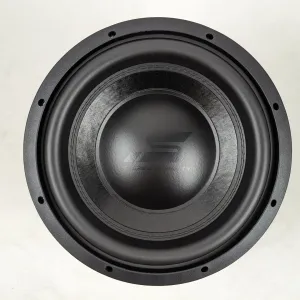
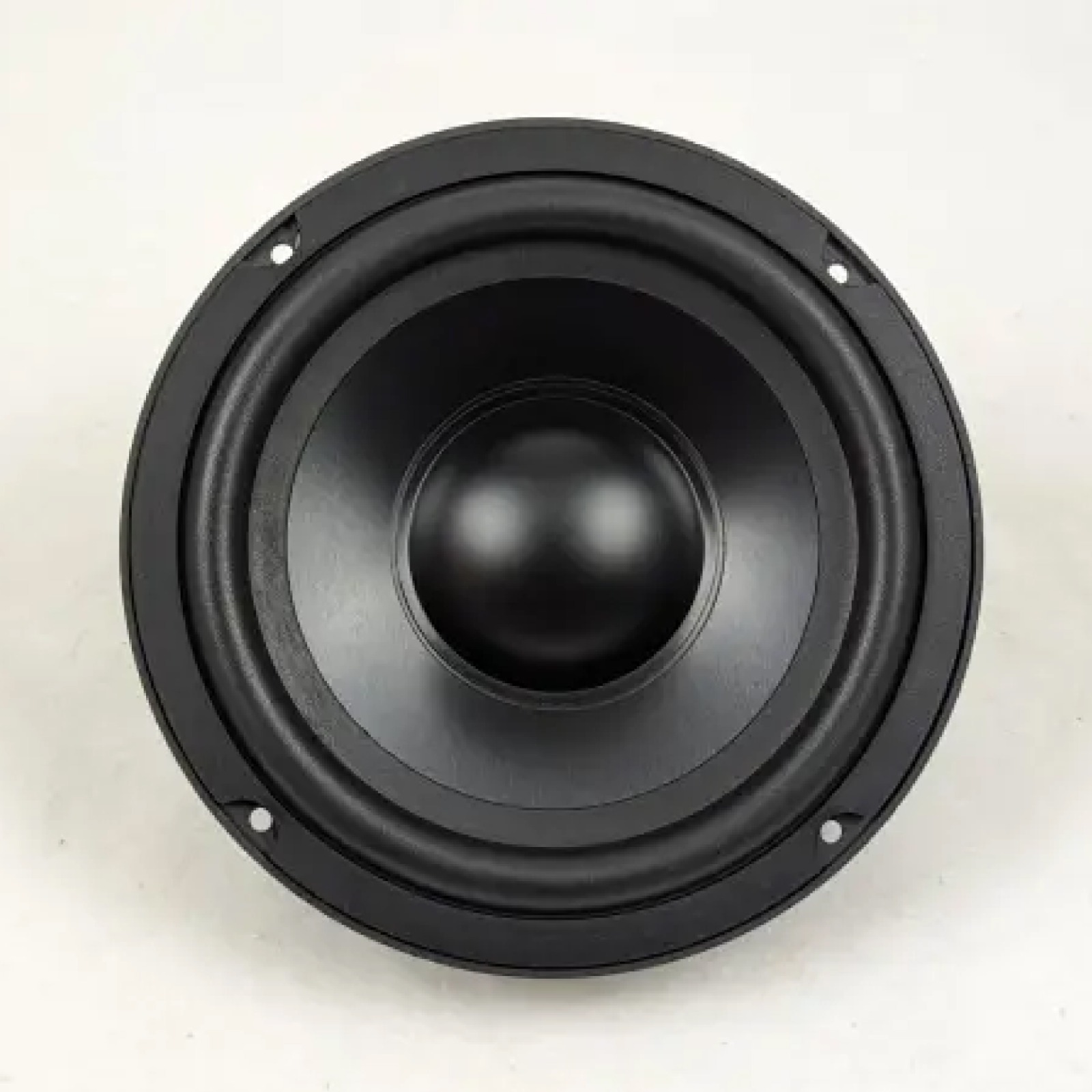
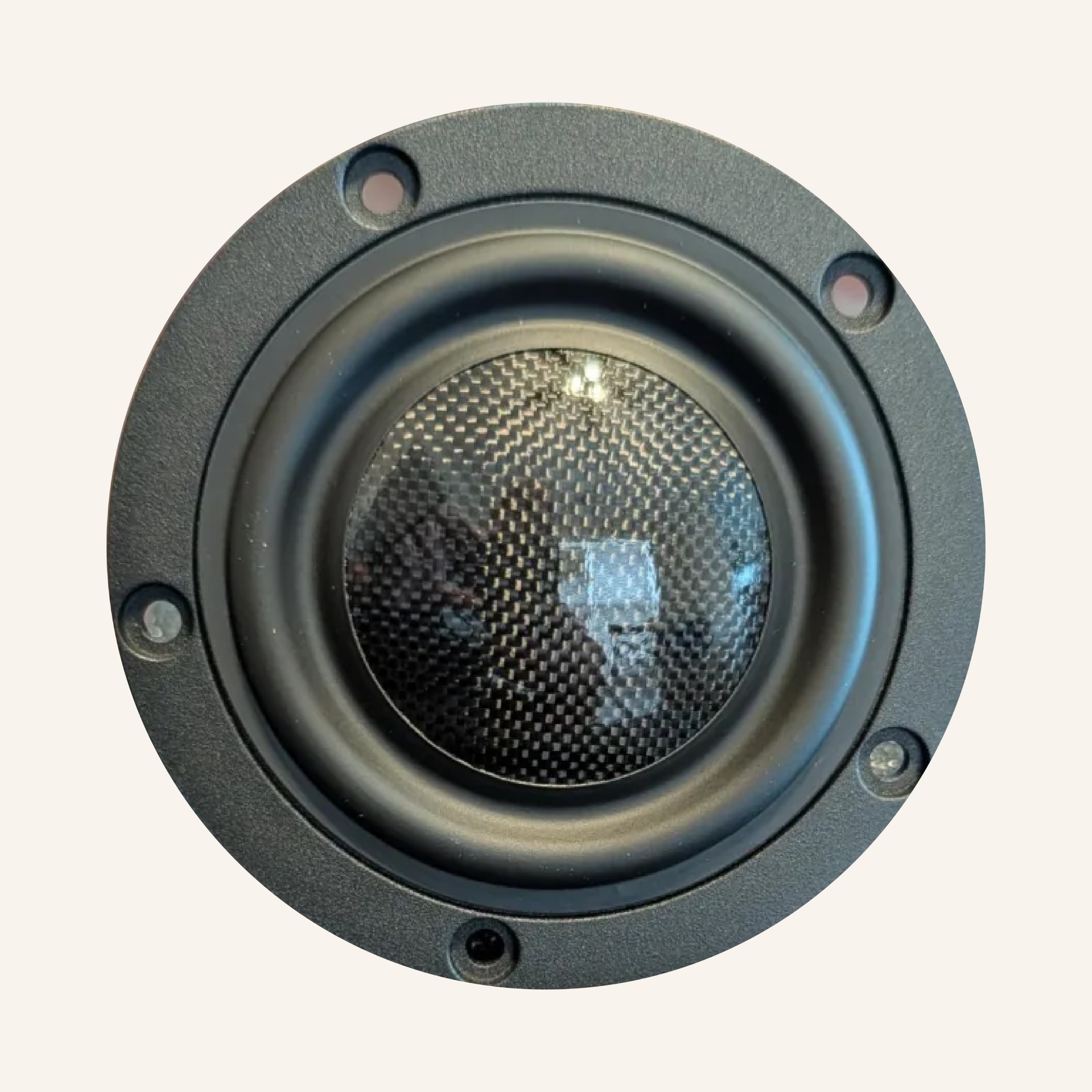
Stereo Integrity has spent over two decades hand-building subwoofers and component speakers in North Carolina, engineered in FEA software and verified on a Klippel analyzer before a single unit ships. No boom for the sake of boom — output you can measure.
Stereo Integrity is a small, engineering-led shop — every driver is modeled in Finite Element Analysis before a prototype is cut, then measured on a Klippel laser analyzer to confirm the motor and suspension behave exactly as designed. The published spec sheet is the actual driver, not a rounded-up brochure number.
That measurement-first culture is exactly why it belongs in Avenue University's line-up. It's the same standard we teach in our calibration courses: don't tell a client a room sounds right — measure it and show them. Stereo Integrity subwoofers give our installers a driver whose numbers hold up under a mic just as well as they do on paper.
For Indian home theaters, that means genuinely deep, controlled bass in the compact sealed enclosures most rooms actually have space for — not a driver that needs a garage-sized box to perform.
Three design decisions run through the entire range, from the 10″ SQL to the 24″ home theater drivers.
Solid copper voice coils on aluminum formers, aluminum Faraday rings and internal shorting rings all serve one purpose — keep inductance low so the cone stops exactly when the signal tells it to, instead of ringing on afterward.
SGLC / shorting-ring motorsDual Nomex spiders with mirrored, sewn-on lead wires hold compliance steady through the full stroke and stiffen only near the mechanical limit — so distortion stays low right up to the point the driver is actually asked to work hard.
Dual Nomex spidersTreated paper pulp on the SQL series and carbon-fiber/kevlar sandwich construction on the large-format home theater drivers both chase the same goal — a cone that moves as one rigid piston instead of flexing under high excursion.
Paper pulp & carbon fiber conesEvery driver below is available through Avenue Sound India and demoed at our Devanahalli and Seawoods showrooms.
The drivers built for dedicated theaters and serious 2-channel rooms — from a compact 15″ up through 18″ and a full 24″ — large-format, high-excursion designs meant to reproduce the bottom two octaves with real authority, in an enclosure that still fits inside a cabinet or false wall.

A 24″ driver built to reach single-digit Hz with real output, in a sealed box small enough to actually build. Triple-stacked ferrite motor, bifilar coil and three shorting rings keep it tight even at full excursion.

Purpose-tuned for infinite-baffle installs — behind a false wall or into an attic space — where there's effectively no enclosure at all. A high Qts and huge linear excursion mean it stays controlled without one.

A 15″ driver for rooms that need HS-24 levels of excursion without the 24″ footprint. 80mm of total linear coil travel from a 250mm triple-stacked motor, in a carbon-fiber sandwich cone.

The same 24″ output in an 8.75″ mounting depth — under-seat or cabinet installs where the HS-24's 12.75″ depth won't fit. An XBL² neo motor and 5″ voice coil keep excursion high despite the shallow build.

The middle ground between the HST-15 and the 24″ platform — same 80mm of total linear coil travel and triple-stacked motor, in an 18″ format for rooms that don't have room for a 24″ but still want serious excursion.

The SQL series driver most home theater builds actually end up spec'd with — extends to 8Hz in a 2 ft³ sealed box, with the price-to-performance ratio that's made it Stereo Integrity's best-seller.
Stereo Integrity's best-selling performance-to-cost range, plus the shallow-mount BM-11 for cabinets and tight spaces. Available from a compact 11″ shallow subwoofer up to a 15″ SQL, each with real Klippel-verified specs behind the badge.

The largest SQL, and the one most often chosen for dedicated theaters — extends to 8Hz in a 2 ft³ sealed box, with enough clean output for the loudest LFE moments.
The sweet spot for cabinets and furniture-integrated builds — nearly all the output of the 15″ in a noticeably smaller footprint and enclosure volume.

A 3.0″ mounting depth for cabinets, kick panels and false floors that can't take a standard subwoofer's depth — still a genuine 500W RMS driver with a carbon fiber flat diaphragm, not a token bass shaker.

Every SQL is checked against a full Thiele-Small parameter set and BL/Kms Klippel plot before it's approved for sale — we can walk you through what each curve means for your specific room.
2-way and 3-way component sets built around the TM65 tweeter/midrange platform, for systems where imaging and tonal accuracy matter as much as output.

The anchor of every component set. Pairs with the M25 for a simple 2-way, or with the M25 and M3 Carbon together for a full 3-way front stage.
The midrange link between the TM65 and the M3 Carbon in a full 3-way build, recommended crossed over around 500Hz and 3,000Hz either side.

Carbon-coned midbass driver for the bottom leg of a 3-way set. Can be crossed as low as 500Hz with the TM65 if the front stage needs it, though we recommend staying above that for headroom.
Motor structure and magnetic circuit are simulated before a single prototype is machined, so the BL curve is designed in, not discovered afterward.
A laser-based analyzer measures the actual assembled unit — not a sample from a batch — confirming Thiele-Small parameters and the BL/Kms curve before it's approved for sale.
Klippel plots, spec sheets and enclosure guides are public, the same way we publish measured results after every Avenue University calibration session.
One long-time HS-24 owner described the low-frequency extension as unlike anything else he'd tried, noting he could measure well over 120dB near 10Hz with barely a whisper of distortion in his room.
An installer who has built more than a dozen enclosures for the same driver called its low-end reach unmatched among the subwoofers he's used, without giving up mid-bass punch in either sealed or ported builds.
A theater owner running paired IB-24s in an infinite-baffle install said the switch delivered the cleanest, most controlled bass he'd heard, even against rooms built around far pricier drivers.
Book a listening session at our Devanahalli or Seawoods showroom, or bring us your room dimensions and we'll recommend the right driver and enclosure before you commit to a build.